When presented with the project of creating a screencast for a writing arts course at my college, this was the question I wanted, most of all, to answer. In a world of twitter, blogging, and too many writing programs to count, what does it mean to be an aspiring author?
I posed the answer in this screencast, made using the presentation website Prezi, and as screencapture program known as Jing (also with the help of my boyfriend, who let me use his Macbook when my netbook proved unable to handle screencasting).
But if you don't want to hear my lovely voice, I'll offer a textual alternative for you. This isn't my script, but instead a sort of spiritual sibling of my previous presentation.
History has shown us that humans are story-tellers. Even before the written word was invented, we took records in whatever ways we could--through cave-art and carvings--and as we developed language we made room in our lives for bards and troubadours, for folklore and mythology. We developed a long oral tradition that eventually became a written one. It has changed us, and defined us as a society.
But more than make writing easier, writing technology has changed us. "The medium is the message," as Marshall McLuhan would say. Typewriters made story-telling accessible to many, and computers even more so, giving even the more easily-distracted means to sit down and write in programs like FocusWriter, or the organized but always-on-the-move writers Scrivener. And where typewriters were less-then -portable, laptops can be taken very near everywhere. We have so many options concerning how we write now, it's truly amazing. There really is almost no excuse for not sitting your butt down and working on a story.
Furthermore, it's given us a community. While I feel out of place among most writers I know through genre or style differences, I can find any number of people with similar interests on Twitter or Tumblr or Facebook. We can create communities and give and receive encouragement, regardless of what friends think or family thinks or your cat thinks. There's always a kind word or helping hand. All this, through technology.
And even if I begrudge the computer at times, I'm so grateful I live in a time with all this for options. My goals seem so tangible, more tangible with the people I have met and the all the writing I can do.
Saturday, November 24, 2012

Wednesday, November 14, 2012
Sorry, Muse: I'm taking credit for this one
Lately I've been hearing a lot about muse on Twitter. Perhaps it's the effects of NaNoWriMo (which I don't participate in), or the fall weather, or the fact everyone--writers especially--wants to believe in a little magic.
But writing isn't magic.
 I consider myself a good writer. Not great, not wonderful. But not bad, and perhaps a bit above okay. I have some sense of style, and some sense of pacing. I get 'A's on papers from difficult professors once I have them looked over by an editor (#writetip number 1: fall in love with an editor, move in with that editor, use said editor to review your work for free). I do all this and I've never had a muse.
But I know what I want, and I've got my desire to write, to be a goddamn published author. I've just had that drive, that desire to put blood, sweat, and tears into everything I do (so long as I really like it... if I don't, that's another story). Sometimes this works, of course, and sometimes it doesn't. And sometimes I even get discouraged and don't write for days or weeks or months at a time, but like a girl silly in love I always come back. Always.
When I don't write, I work with my hands a lot. Knitting. Sewing. Bookbinding. Everything that requires time and effort to see results. There are no muses in work like this. I might get lost in making stitches, but it's always me and the project, nothing more. Writing is like that for me. One word after another. Not always fun, but always worth it, because I'm there, I'm making something new, achieving something tangible, albeit not as tangible as a hat or skirt. I can't reach out and touch it, but it's there to be read.
So if you don't have muse, don't be discouraged. And if you do, don't be so quick to give away the credit. Writing comes from you, one stitch, one word at a time, and that's something you should be proud of, whether it came easily in a dream or had to be ripped from your chest.
But writing isn't magic.

But I know what I want, and I've got my desire to write, to be a goddamn published author. I've just had that drive, that desire to put blood, sweat, and tears into everything I do (so long as I really like it... if I don't, that's another story). Sometimes this works, of course, and sometimes it doesn't. And sometimes I even get discouraged and don't write for days or weeks or months at a time, but like a girl silly in love I always come back. Always.
When I don't write, I work with my hands a lot. Knitting. Sewing. Bookbinding. Everything that requires time and effort to see results. There are no muses in work like this. I might get lost in making stitches, but it's always me and the project, nothing more. Writing is like that for me. One word after another. Not always fun, but always worth it, because I'm there, I'm making something new, achieving something tangible, albeit not as tangible as a hat or skirt. I can't reach out and touch it, but it's there to be read.
So if you don't have muse, don't be discouraged. And if you do, don't be so quick to give away the credit. Writing comes from you, one stitch, one word at a time, and that's something you should be proud of, whether it came easily in a dream or had to be ripped from your chest.
Friday, October 26, 2012
Wicked: Women in Horror Writing
While developing the idea for this post, I decided to do a few experiments. They were simple, really: I Googled “Women in Horror”, then “Women in horror writing”. I texted people with the request: “Name all the women horror writers you can think of. Go," and I looked at the best sellers under “Horror” for the Amazon Kindle and Barnes and Noble Nook.
With the first Google search the results I got weren't as bad I was expecting, but they still leave something to strive for: Google gave me links to Women of Horror Month (cool!), and then lists:
One by Maxim, of course. The sexiest women in horror (no, I'm not linking it), including lovely lines such as: “Whenever P.J. appeared in a movie, you could be sure of two things: Gratuitous breastage and a quick, unsavory death.” This, really, encapsulated the primary issue with women in horror movies (which often place women in one of three roles: “hot virgin girl who lives,” “hot promiscuous girl who dies naked,” and “mother who most protect her child and is also probably hot, unless she's the villain”), but it wasn't really the story I was looking for.

Friday, October 19, 2012
The Season of Short Stories: Six Tales to Read Before Halloween
Halloween is the season of the short story. I've mentioned in previous blog posts that perhaps, more than any genre, horror is made for the short story medium. After all: who didn't sit up at night during a sleepover telling scary stories as a child, whispering into flashlights after a secret game of "light as a feather, stiff as a board" and before someone pulls out the Ouiji board?
And since Halloween means horror, the fantastical, and stories you can tell to scare your friends, I decided to compile a list of six stories to read for Halloween: but these stories aren't your typical ghost stories. Instead, these are tales that will leave you feeling haunted.

And since Halloween means horror, the fantastical, and stories you can tell to scare your friends, I decided to compile a list of six stories to read for Halloween: but these stories aren't your typical ghost stories. Instead, these are tales that will leave you feeling haunted.

1. "Stone Animals" by Kelly Link
I read this story curled up in a library chair, sick and tired. It's not traditional horror, but it certainly leaves the reader feeling haunted, much like the things in the story. In Stone Animals, a family moves into a house: but it's not the house that's haunted, nor is it their things that are haunted, at least to start. If anything, when coming to the house, it's the people themselves that become haunted (although they certainly don't think that). Stone Animals is one of the few stories I've read where I had no inkling of where it was going and when it would get there. I knew there were rabbits, objects that were wrong, and a family was strained by their past, but how it would all come together was another thing entirely. Even more than that, it was a story that left me feeling haunted after I read it. I spent the rest of my time in the library that day feeling uneasy and strange, and unwilling to read another story because it just seemed wrong to do anything but think of that one.
Stone Animals is available for free at Small Beer Press as part of Kelly Link's "Magic for Beginners" collection. You can also get it (and five to twelve other books) as part of the Humble Bundle ebook bundle for charity (only until October 23). I'm an avid supporter of the Humble Bundle, and I encourage you all to take that route if you can.
Stone Animals is available for free at Small Beer Press as part of Kelly Link's "Magic for Beginners" collection. You can also get it (and five to twelve other books) as part of the Humble Bundle ebook bundle for charity (only until October 23). I'm an avid supporter of the Humble Bundle, and I encourage you all to take that route if you can.
Wednesday, October 17, 2012
Sleep Season
In spring things happen.
I suppose that's vague, but for the past two years spring has marked things, hard things, for me. Death, mostly, although I suppose that is a bit blunt.
Bears sleep through the winter, and sometimes I think I need to sleep through the spring and summer, because while the rest of the world is reborn I think of my grandfather, my cousin, and my childhood best friend. The list keeps getting longer. Names ticked off every year since 2009. If I were to list them we would be here so long.
And what does this have to do with writing?
Wednesday, October 10, 2012
"We are all books of blood..."
Every day is Halloween for me.
I don't mean that in a '90s Goth, pale makeup and platform boots way (although back in 2005 I did). I also don't mean it in a human bones in my apartment way (because all my apartment really says is "my boyfriend likes sports" and "I have a cat"). Mostly I mean it in a reading horror stories and watching horror movies to fall asleep every day and night way.
And, really, I read a lot of horror. I watch a lot of horror. I read and watch a lot of things that wouldn't normally be considered horror but are so bad-- well, that's another story.
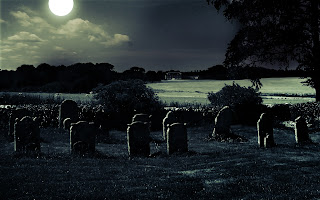
And lately I've been reading Clive Barker's "Books of Blood", a terrifying tryst of short stories and one amazing introduction in the full collection that really makes you think about how the publishing industry has changed.
In 1984 the first collection of "Books of Blood" was published. At the time, Barker was a relative unknown -- a sometimes-movie-guy who wrote fun, gory, and occasionally brilliant short stories that were there to scare you. It's something that you never see now. Not because of the lack of horror writers, or lack of short stories, or lack of new authors, but because of a lack of willingness for a publisher to release an entire collection of one new author, however great he or she is.
It's something that makes me incredibly sad, because short stories are such a cornerstone of horror. They're something almost everyone has grown up with, even if not in written form. Horror stories are the campfire, late-night-sleepover tales. They're the things you dare each other to do in after-school programs and school yards. "My friend went to the mirror and said 'Candyman' three times and woke up covered in bruises and had candy in her bed." Bloody Mary and monsters in the closet. Maybe they weren't the world's most brilliant stories, but they were there.
Now they seem impossibly hard to track down. Yes, there are the occasional anthologies stuffed in bookshelves, the new collections by Stephen King or a couple other authors everyone has already heard of, but to find a good tale to terrify, told in a new voice (that doesn't involve vampire romance in the YA section), it's all but impossible to find, because there is an unwillingness to take risks, to release good, scary fiction by someone who no one knows.
I suppose in some ways this is where self-publishing comes in, but that's not a track I am familiar in.
Mostly, I just think: It's the season for horror, but after I put down my Clive Barker books, my Lovecrafts and Kings, what am I left with? And why, when there are so many aspiring horror writers, I can never seem to find any in print?
These are things I want to know.
I don't mean that in a '90s Goth, pale makeup and platform boots way (although back in 2005 I did). I also don't mean it in a human bones in my apartment way (because all my apartment really says is "my boyfriend likes sports" and "I have a cat"). Mostly I mean it in a reading horror stories and watching horror movies to fall asleep every day and night way.
And, really, I read a lot of horror. I watch a lot of horror. I read and watch a lot of things that wouldn't normally be considered horror but are so bad-- well, that's another story.

And lately I've been reading Clive Barker's "Books of Blood", a terrifying tryst of short stories and one amazing introduction in the full collection that really makes you think about how the publishing industry has changed.
In 1984 the first collection of "Books of Blood" was published. At the time, Barker was a relative unknown -- a sometimes-movie-guy who wrote fun, gory, and occasionally brilliant short stories that were there to scare you. It's something that you never see now. Not because of the lack of horror writers, or lack of short stories, or lack of new authors, but because of a lack of willingness for a publisher to release an entire collection of one new author, however great he or she is.
It's something that makes me incredibly sad, because short stories are such a cornerstone of horror. They're something almost everyone has grown up with, even if not in written form. Horror stories are the campfire, late-night-sleepover tales. They're the things you dare each other to do in after-school programs and school yards. "My friend went to the mirror and said 'Candyman' three times and woke up covered in bruises and had candy in her bed." Bloody Mary and monsters in the closet. Maybe they weren't the world's most brilliant stories, but they were there.
Now they seem impossibly hard to track down. Yes, there are the occasional anthologies stuffed in bookshelves, the new collections by Stephen King or a couple other authors everyone has already heard of, but to find a good tale to terrify, told in a new voice (that doesn't involve vampire romance in the YA section), it's all but impossible to find, because there is an unwillingness to take risks, to release good, scary fiction by someone who no one knows.
I suppose in some ways this is where self-publishing comes in, but that's not a track I am familiar in.
Mostly, I just think: It's the season for horror, but after I put down my Clive Barker books, my Lovecrafts and Kings, what am I left with? And why, when there are so many aspiring horror writers, I can never seem to find any in print?
These are things I want to know.
Monday, October 1, 2012
Just Write: Or How the Internet Might Be Making Things Hard for Writers
In 2008 Nicholas Carr wrote an article called "Is Google Making Us Stupid?" In 2012 some professor at a New Jersey college made his Writing Arts class read it.
That was this weekend. I am in that class, and while I'm not sure if Google is making us stupid (although I'm more inclined to think "different" is a more accurate term), I'm certainly forced to wonder if the Internet is not making us different, and perhaps worse, writers.
In 2007 I still had dial-up Internet service (AOL!) and my time on the Internet was mostly reserved for cooperative writing. Long, drawn-out posts of fiction between myself and other writers. Most of it was trite, an exercise in which a bunch of high school kids who liked writing tried to be better than everyone else at writing. I'm not proud of anything I wrote in that time, although I don't regret it.
Yet soon after high school I finally got what everyone else already had: high speed Internet, and oh! how things had changed. Suddenly I could fly through pages, access information at the speed of light, and it was undoubtedly awesome, and yet as I was consuming more and more information, I noticed one this: I was producing less and less. I was suddenly a country who imports more than exports, and while it did not bother me at the time, it does now. Eventually I would become much like Nicholas Carr, going from page to online page in a dizzying speed, no longer reading as much as I used to, only with the added bonus of not writing much anymore either. It was suddenly a clicking game: A few sentences of writing here, another hit of the Internet, repeat.
It took me time to realize that perhaps this new way of consuming information was harming my writing, effecting my ability to sit and write the amount of words I wanted -- needed, really -- to advance as a writer. I could think of a thousand plots but I was no longer able to keep up with the speed of my own mind because so much time was spent jumping around. It got to the point where I eventually had to learn to deprogram myself if I wanted to have any hope of becoming a talented writer.
For me, the real change came when I was forced offline cold turkey, though. My computer fried, I was left with the plucky little netbook, which is good for nothing more than word processing and image-light websites with small layouts. I had to change my way of thinking again, going back to how it was in my dial-up time, where my word processing program was my favored application and the Internet was something to do on down-time, nothing more.
And for awhile I thought this was just me, but as I look at my lovely twitter friends I can't help but see many trapped in the same cycle, tweeting and browsing and posting about how they should be writing when instead they're trapped online, trying to get their thoughts out while still sating the need to consume more and more Internet information, and it makes me strangely sad. How many talented writers are unable to thrive in this environment? And what will it take for them to switch off the Internet, turn off their phone, and just write.
Because that's the most important thing about being a writer, isn't it? Being able to just write?
That was this weekend. I am in that class, and while I'm not sure if Google is making us stupid (although I'm more inclined to think "different" is a more accurate term), I'm certainly forced to wonder if the Internet is not making us different, and perhaps worse, writers.
 |
| This is a symbol for the "information super highway" By crewe1 on sxc.hu |
Yet soon after high school I finally got what everyone else already had: high speed Internet, and oh! how things had changed. Suddenly I could fly through pages, access information at the speed of light, and it was undoubtedly awesome, and yet as I was consuming more and more information, I noticed one this: I was producing less and less. I was suddenly a country who imports more than exports, and while it did not bother me at the time, it does now. Eventually I would become much like Nicholas Carr, going from page to online page in a dizzying speed, no longer reading as much as I used to, only with the added bonus of not writing much anymore either. It was suddenly a clicking game: A few sentences of writing here, another hit of the Internet, repeat.
It took me time to realize that perhaps this new way of consuming information was harming my writing, effecting my ability to sit and write the amount of words I wanted -- needed, really -- to advance as a writer. I could think of a thousand plots but I was no longer able to keep up with the speed of my own mind because so much time was spent jumping around. It got to the point where I eventually had to learn to deprogram myself if I wanted to have any hope of becoming a talented writer.
For me, the real change came when I was forced offline cold turkey, though. My computer fried, I was left with the plucky little netbook, which is good for nothing more than word processing and image-light websites with small layouts. I had to change my way of thinking again, going back to how it was in my dial-up time, where my word processing program was my favored application and the Internet was something to do on down-time, nothing more.
And for awhile I thought this was just me, but as I look at my lovely twitter friends I can't help but see many trapped in the same cycle, tweeting and browsing and posting about how they should be writing when instead they're trapped online, trying to get their thoughts out while still sating the need to consume more and more Internet information, and it makes me strangely sad. How many talented writers are unable to thrive in this environment? And what will it take for them to switch off the Internet, turn off their phone, and just write.
Because that's the most important thing about being a writer, isn't it? Being able to just write?
Monday, September 10, 2012
College Convenience

Except it really was a terrible looking bag.
So I went out to get on exactly like it, but in prettier colors, only to discover they do not seem to exist in the area in which I live, and if they do they are all made of the same unfortunate sort of umbrella material, which is fine if it's raining and less-fine when you're wearing it two days a week. So, naturally, I made one:
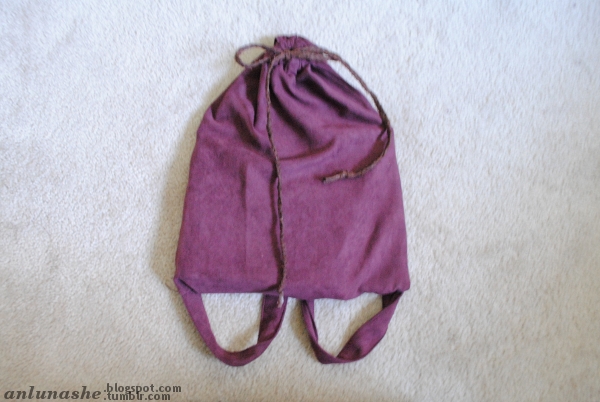
Using leftover fabric and thread, I spent part of yesterday afternoon, when not fighting with my broken printer, making this bag. There are noticeable differences in design, of course: the drawstring is tied in the front and not connected to the straps, while the straps are made of the same soft and comfy fabric as the bag itself. It falls a lot nicer on my back this way.


I used an 'x' style design for securing on the straps -- the same design I've used for the other bags I've made. Strong and sturdy, although not the nicest sewing job I've ever done. Each square was stitched over twice, and then again when adding the middle 'x's.
The drawstrings themselves are made of a braided synthetic fabric I found in the scrap pile, once curtains cut into strips. The braiding is unfortunately rough, and I might replace it eventually, but for now I like the scratchy brown cord.
Wednesday, August 8, 2012
Some Projects Just Want to Watch the World Burn
Sometimes, while working on a project, you come to realize that said project really, really hates you.
And I don't mean that it hits small snags along the way, I mean that it will do anything in its power to make sure the project never reaches completion.
For me, this program was a pair of Phillies pajama pants:
Now, perhaps these pair of pants decided to take a page from the actual Phillies' playbook on how to ruin this baseball season, because they were determined to stay in a half-made state so thoroughly that my sewing machine broke while making them.
Twice.
So, needless to say what was supposed to be the third pair in a set of three pajama pants for my boyfriend's birthday turned into the third very belated gift of pants for a team that apparently hates me just as much as they apparently hate winning games. (My boyfriend's birthday was July 2, if you care to know how long these have taken.) A two-hour project has been prolonged to over a month of waiting, stitching, and breaking gears on my Touch and Sew.
However, it does seem to all be worth it, because out of the three pairs these came out the best. The stitching on the waistband is all perfectly straight, and the hem on the legs gave me no problem at all. Perhaps by this time they had figured I had beaten them at their mind games? The world may never know.
All I know is that when I get my mind set on a sewing project, I will goddamn finish it, even if it stretches a simple project out an impossibly long time and costs me $100 in repair bills.
Now if only I can apply this determination to my writing...
And I don't mean that it hits small snags along the way, I mean that it will do anything in its power to make sure the project never reaches completion.
For me, this program was a pair of Phillies pajama pants:
 |
| I will replace this with a better photo eventually. |
Twice.
So, needless to say what was supposed to be the third pair in a set of three pajama pants for my boyfriend's birthday turned into the third very belated gift of pants for a team that apparently hates me just as much as they apparently hate winning games. (My boyfriend's birthday was July 2, if you care to know how long these have taken.) A two-hour project has been prolonged to over a month of waiting, stitching, and breaking gears on my Touch and Sew.
 |
| These stitches are impressively goddamn straight. Also: covered in fleece so you can't tell. |
All I know is that when I get my mind set on a sewing project, I will goddamn finish it, even if it stretches a simple project out an impossibly long time and costs me $100 in repair bills.
Now if only I can apply this determination to my writing...
Tuesday, July 31, 2012
Writing is taught, not tutored

Before I go farther however, in order to limit any confusion over definitions, I want to note that by "tutorial" I mean the often step-by-step instructions that describe how achieve a certain result. These "how to" pages try to put sometimes-complicated procedures into simple-to-follow steps that makes things easier for the learner to follow.
For the first time, today, I saw the rare "writing tutorial," a how-to of fiction, a step-by-step paint-by-numbers of literary craft. It was no minimization of The Elements of Style or simple "Five Tips to Better Your Writing!" It was a list, moments of books and what to write, a beefed up version of a favored Lewis Carroll quote—

"Begin at the beginning... and go on till you come to the end: then stop."
You see, you begin with describing your setting (gone are the days of powerful first lines), then introduce your characters, and go on and on with these instructions until you have a short story that reads of starts and stops and trying-too-hards. I'll spare you all the details. (And oh! There were details.) And while writing may be a step-by-step process for some, it is not something that can be quantified and numbered out like a new Photoshop trick. It is something that needs understanding, dedication, and more than a few quick clicks of a mouse or fancy filter.
You cannot put the process of writing down into "ten easy steps." You can show a man proper rules for parenthesis, or write the best way to pen an unbiased article, but no two stories are the same, and no singular method can word for everyone, or even anyone. To try is to insult the craft, and to insult the people who love it. Truly, it's a shame that people try to do even that.
But what about you: Have you ever seen a baffling "how to" online? And what's the worst writing advice you've ever been given?
(And for the record, I love sewing because it is the perfect melding of the mathematical and the creative.)
Tuesday, July 24, 2012
Finding Your Roots
Why did I start writing? It's something I think about sometimes, in between hating my work, stressing over my laziness, and otherwise driving myself completely insane.
It's then I try to remember my first story, the first time I wrote something down. I remember doing the National Novel Writing Month Challenge in 2006, but before that I wrote prose and poetry through middle and high school. Even before that I recall hunching over the coffee table growing up and trying to write the sequel to Harriet the Spy. (After all, no one tells a kid about copyright laws. Or, apparently, fanfiction.) Before that, before I could actually write, I would take a crayon and a blank sheet of paper and painstakingly make "letters" and then sit down and tell my mother the story that I "wrote".
In that sense, I suppose I've always been a writer. But surely there was something there that shaped me, that made me into the writing I am today: uncertain and a little shaky, but confident in my own creativity and my desire to craft a story.
 And it always comes down to books: The books I read as a child, the ones I read as an adult. More than The Elements of Style or any book on the craft of writing, it's novels themselves that have showed me the way. First with Tamora Pierce, who gave me a love of adventure, then Laurie Halse Anderson and Ann Brasheres whose characters were real, strong, and good, despite being in a real-world setting and written in a genre where it is so easy to portray teenage girls and woman as catty, cruel, and petty. Stephen King proved to me that not only movies can scare, and Haruki Murakami and Kafka melded the real world and the absurd. And Neil Gaiman: Neil Gaiman gave me someone to admire, someone to aspire to be like.
When I struggle, which I often do, I find myself looking at these books again. Yes, even the Tamora Pierce ones. Even Animorphs, a series I have in it's entirety on my Kindle despite first reading it when I was only ten years old. I'm twenty-three now, and I still sometimes read Animorphs.
I think it's important, remembering, reading, and re-reading these books. Because they meant so much the first time I read them, and they gave me things to aspire to. They make me remember my roots, remember thirteen-year-old Elle sprawled out on the floor thinking about how much I would love to write stories like these. And sometimes they make me realize that even though I did not end up being a published writer at sixteen (just like Amelia Atwater-Rhodes), I've still written stories that I think thirteen-year-old me would like. And that might not be a publishing contract or millions of dollars, but it's something, and it keeps me going.
What are the books that shaped your writing? Do you ever reread them, even if they're directed for younger readers?
 |
| Original artwork for American Gods. |
In that sense, I suppose I've always been a writer. But surely there was something there that shaped me, that made me into the writing I am today: uncertain and a little shaky, but confident in my own creativity and my desire to craft a story.

When I struggle, which I often do, I find myself looking at these books again. Yes, even the Tamora Pierce ones. Even Animorphs, a series I have in it's entirety on my Kindle despite first reading it when I was only ten years old. I'm twenty-three now, and I still sometimes read Animorphs.
What are the books that shaped your writing? Do you ever reread them, even if they're directed for younger readers?
Wednesday, July 18, 2012
A Touch of Whimsy
I suppose I'm an adult. My boyfriend definitely is, being twenty-six and an editor at a well-regarded medical publication. However, despite the fact the label of "adult" generally means certain childish things no longer send you into fits of laughter, there is a word that still sends my boyfriend into a state of uncontrollable giggles.
That word is "poops."

That word is "poops."

And since said boyfriend is a fairly practical person when it comes to gifts (I made him pajamas for his last birthday), and he jokingly mentioned wanting a decorative pillow for his couch I decided to take up the challenge of making him a classy pillow that quite simply stated the word "poops" on one side.
Now, I have never embroidered before much less inflicted myself to the tricky world of freehand embroidery, but I figured it would be worth a try to craft a pillow that would leave the lad in stitches.
It wasn't fun.
Sunday, July 15, 2012
Shut up and write! (Or whatever it is you do.)

I have an excuse for everything, sometimes even two or three, and when it comes to things I have to do, being a self-employed writer/seamstress mucking about waiting to finish college, I have a list of excuses longer than James Joyce's Ulysses, especially since I always have "another day" to push it back to.
And yet, here I am one month into a story and only 3,000 words in. Which, going back to James Joyce, might not be bad for a certain Irish author, but is right terrible for someone with an excess of time, a room of quiet, and no substance abuse problem to speak of. (Which, granted, might be the problem.)
But for those of us with no desire to pick up the bottle and replicate the lives of the authors of yore, we have to figure out how to make time (and keep time!) in a world where the Internet, cell phones, television, and shopping sales are all calling out our names.
For me, the wake up call came from trying a thousand things other people suggested, discovering none of them worked, and adapting them to work for me.
"Write 4,000 words a day, and don't stop until you do!"
Various authors have cried this out to me as a muddle through the rough draft of a short story. "Two pages!" "Four hours!" "Just opening a Word document counts!" All of which are good and well (except for the last suggestion), but were not good for me.As much as I wish I could sit down and pound out 2,000/3,000/4,000 words a day, I cannot. I am simply not used to sitting still that long. Furthermore, I'm not used to sitting down for more than an hour at a time. During long classes in college I lived for the five minute lecture breaks where I could stretch my legs, and being a seamstress means I'm rarely sitting for too long, even as I'm sewing: there are always things to cut, dresses to try on, and patterns to wrangle.
Subscribe to:
Posts (Atom)